
Metal Step Tile Roof Panel Machine
Want to learn more about roofing sheets machine price? Contact us now! Beenew offers a wide range of metal roofing forming machines!
Description
Product Overview
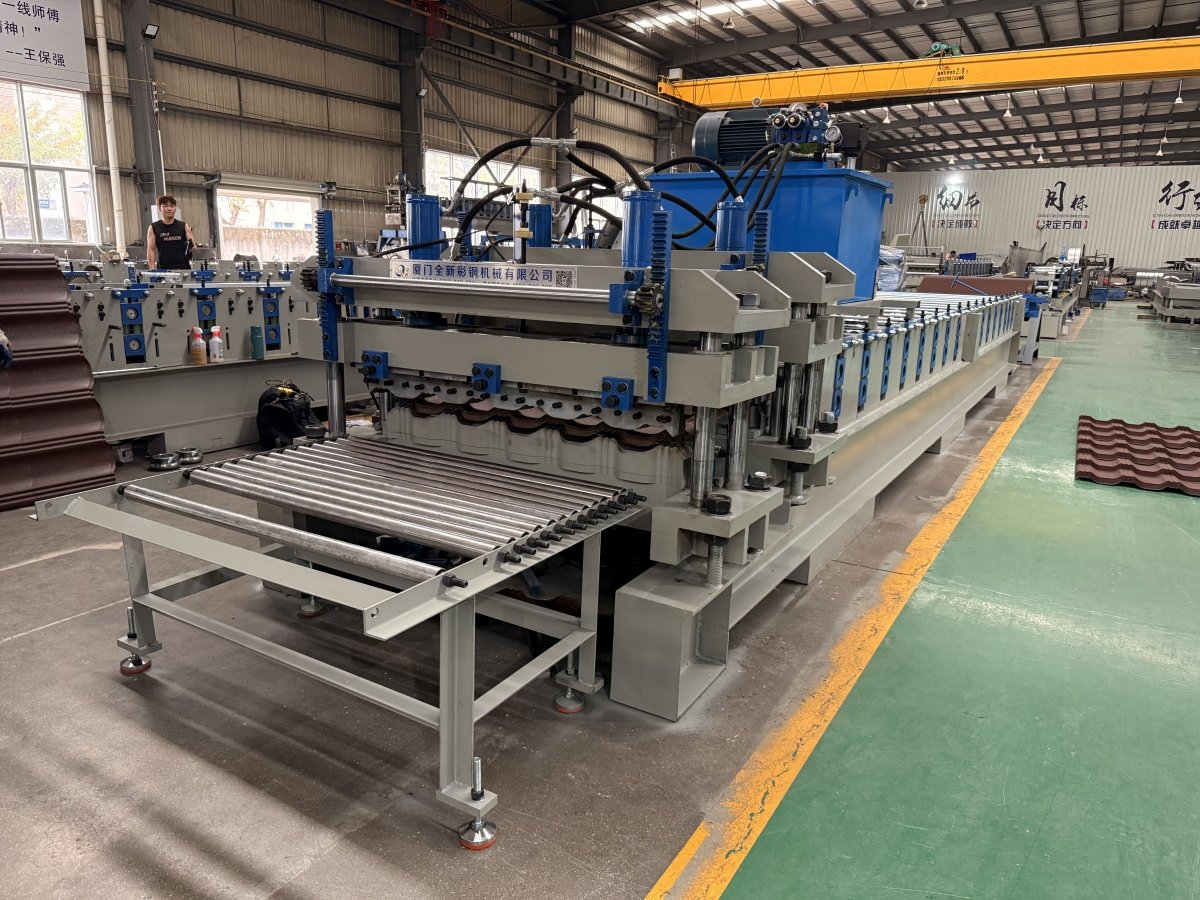
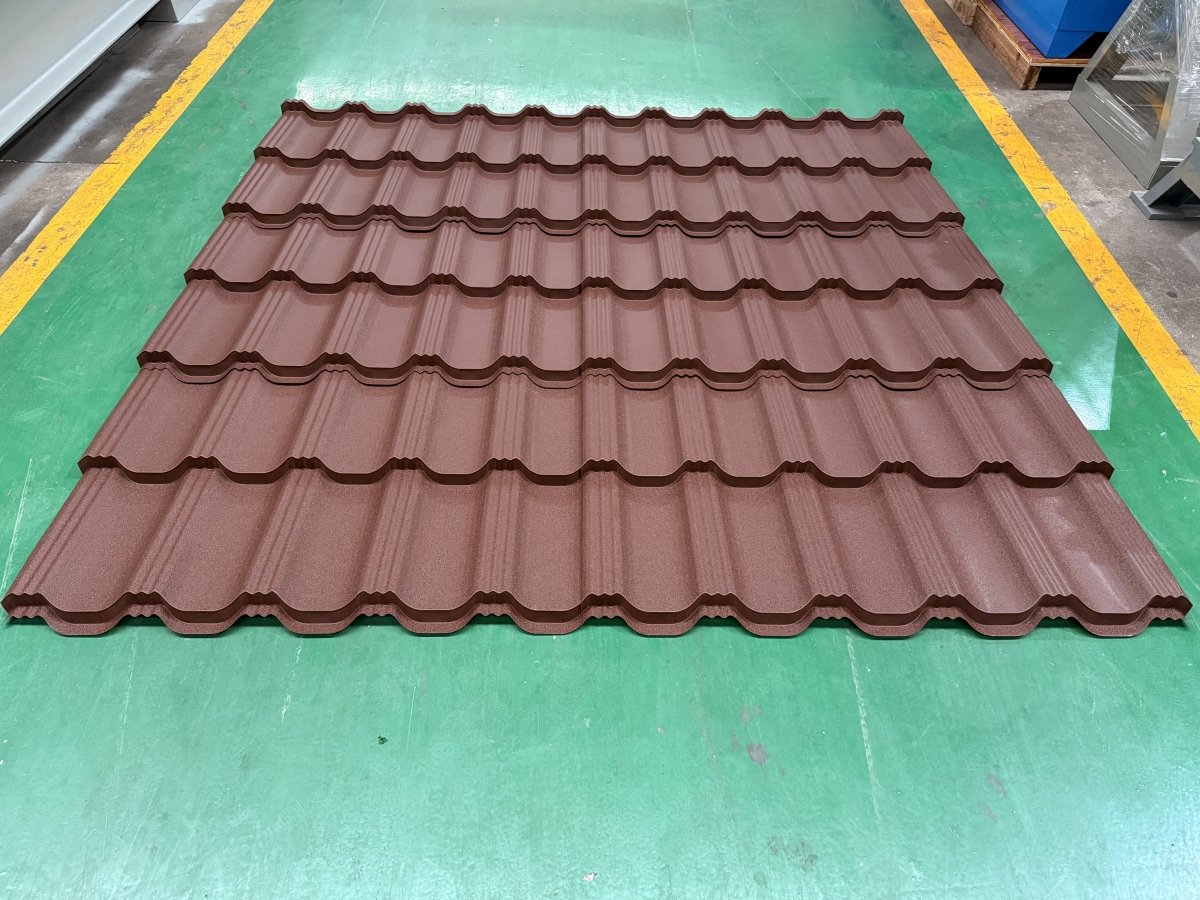
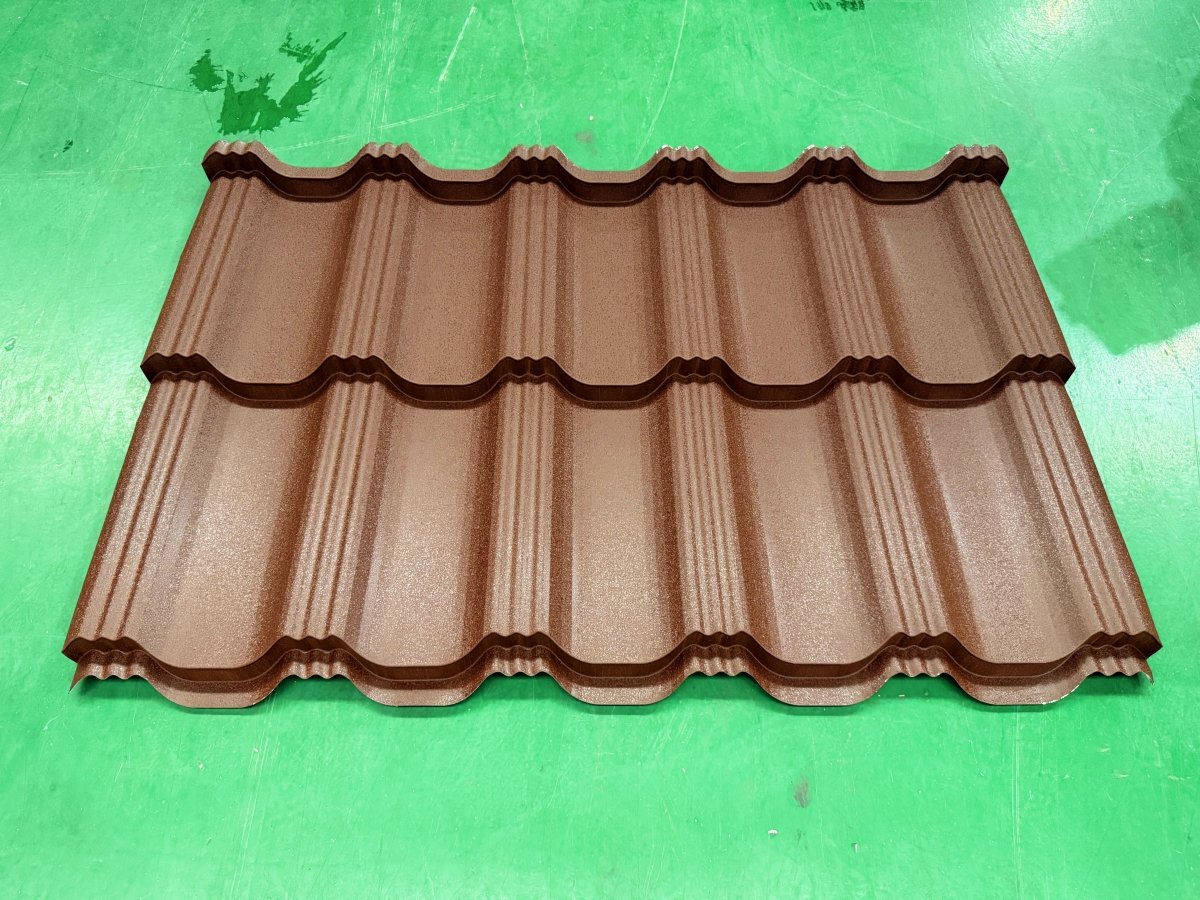
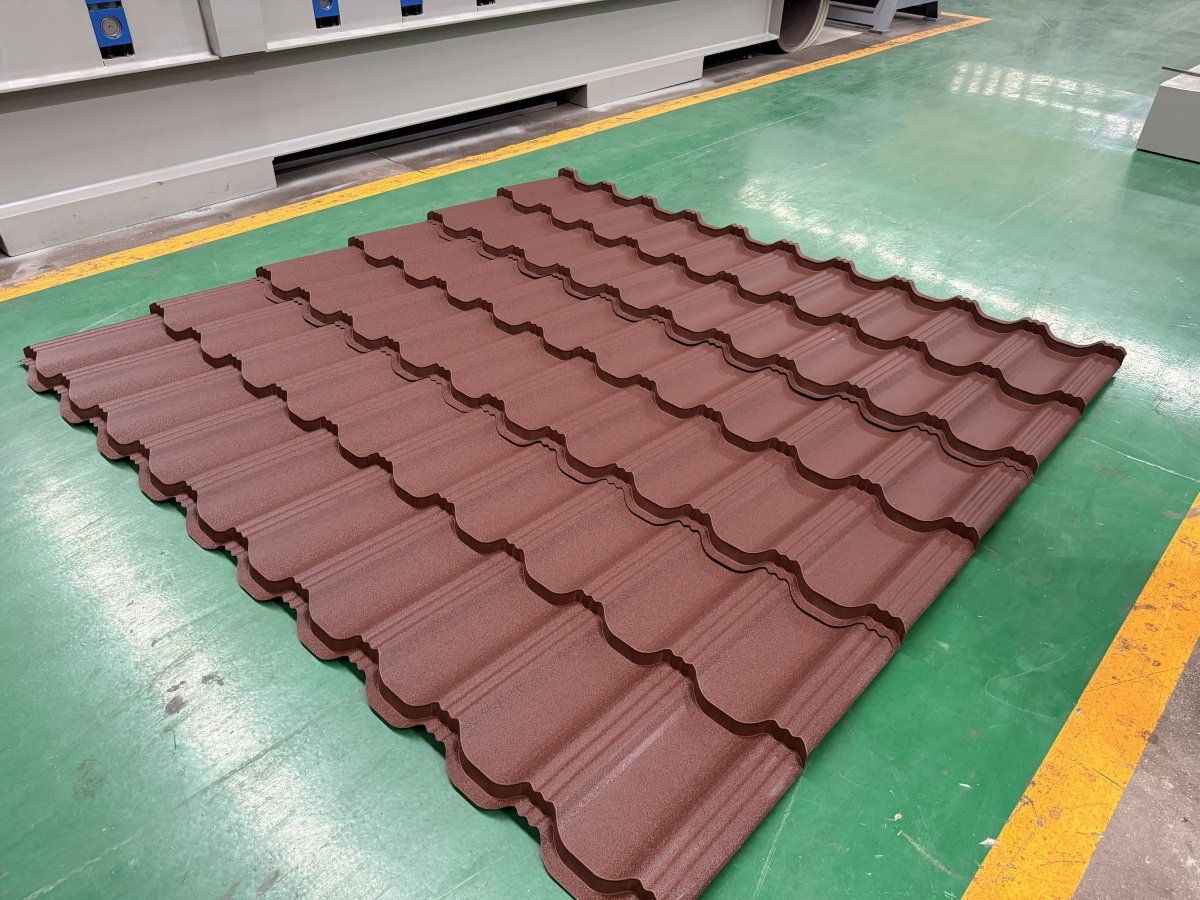
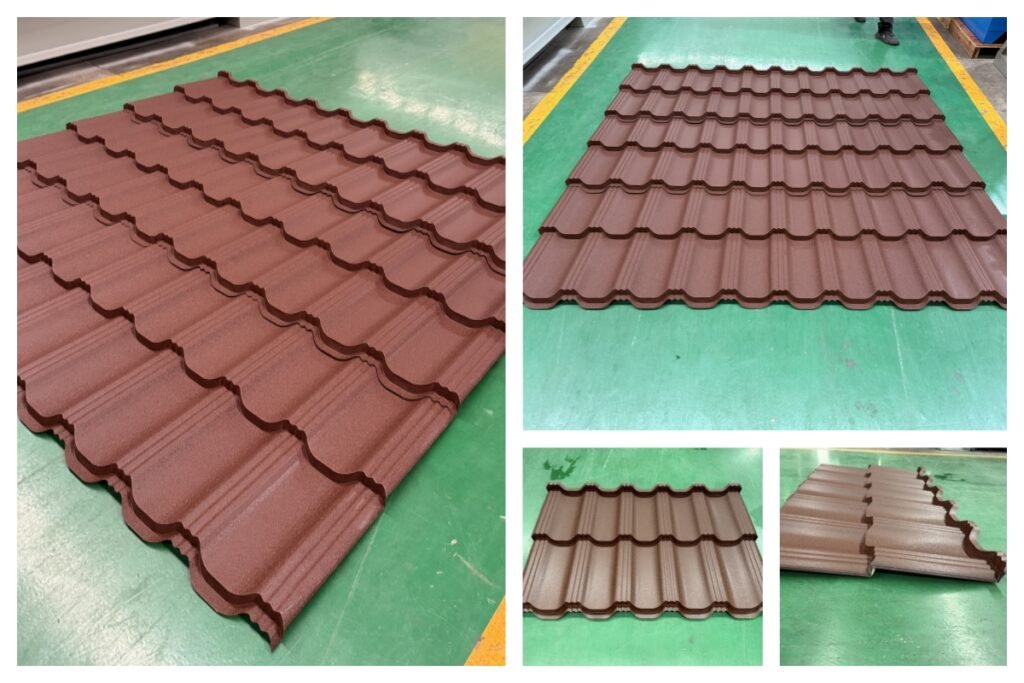
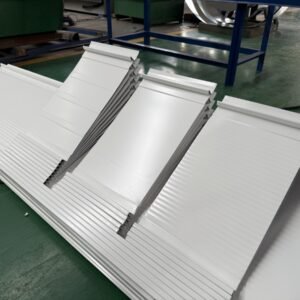
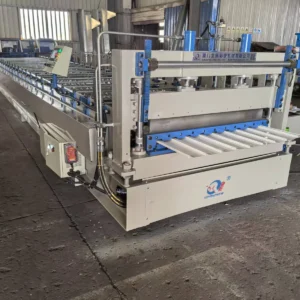
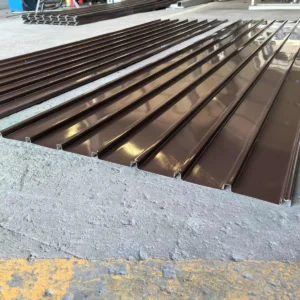
The YX26-214.9-1075 is a heavy-duty Metal Step Tile Roll Forming Machine designed specifically for producing glazed steel tiles from Q235 galvanized or color-coated coil stock. This roofing sheet machine delivers formed sheets with a 26mm rib height, 214.9mm pitch, and 1075mm effective coverage width — a profile widely used in residential and commercial roofing where both aesthetics and weather-tightness matter.
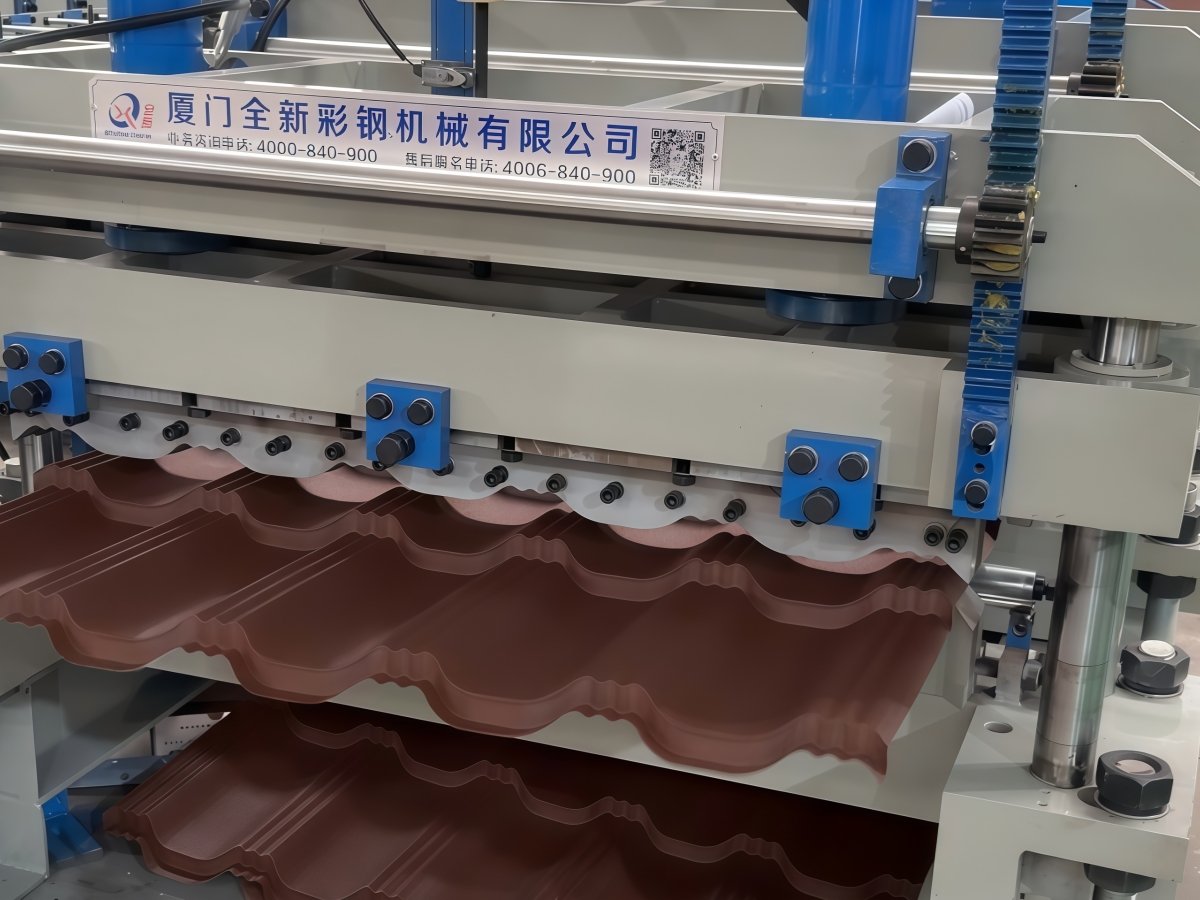
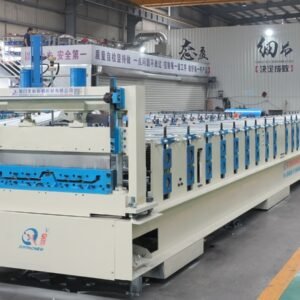
What sets this roofing sheet machine apart is the integrated hydraulic stamping station, which forms a stepped pressing profile (35mm deep) at 350mm intervals while the machine is stopped, then cuts to length — all in one controlled sequence. It is not a continuous flying-shear type; instead, it runs at a moderate forming speed, stops for stamping and shearing, then resumes. This makes it especially suitable for shops that need consistent embossed details and clean, square edges without secondary finishing.
Video of Metal Step Tile Roll Forming Machine
Material and Forming Specifications
| Item | Specification |
| Raw material | Q235 steel sheet, pre-painted or galvanized |
| Material thickness range | 0.3 – 0.6 mm |
| Coil width | 1250 mm |
| Effective coverage width | 1075 mm |
| Rib height | 26 mm |
| Pitch | 214.9 mm |
| Forming stations | 18 passes |
| Forming speed | 2 – 2.5 m/min |
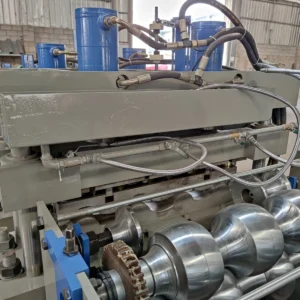
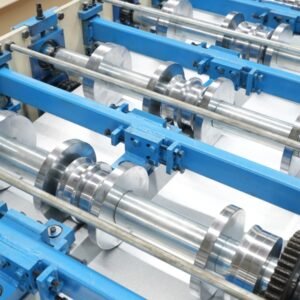
The 18 forming stands progressively shape the strip. The roll shafts are 75mm and 85mm in diameter, supported by 18mm-thick side plates and mounted on a heavy H396×199 base frame. This combination adds enough rigidity to be able to handle 0.6mm material without deflection, allowing the finished ribs to remain straight and consistent over their entire length.
Drive and Power System
Hydraulic power: 15 kW
Servo drive motor: 5.5 kW
Voltage: 380V / 50Hz / 3-phase
The main transmission uses a geared motor combined with bevel gear and chain drive. The servo motor provides precise speed regulation, which directly affects the accuracy of both the profile shape and the cut length. Unlike variable-frequency drives that can lag under load, the servo system maintains torque across the speed range, giving you consistent output even when the coil thickness varies slightly.
The drive train uses 1.2-inch pitch chain with bevel-gear synchronization — a robust setup that distributes load evenly across the stands and reduces the risk of skewing during forming.
Roller and Shaft Details
| Component | Specification |
| Roller material | 45# carbon steel, precision-machined |
| Surface treatment | Hard chrome plated + brushed and polished |
| Shaft diameters | 75 / 85 mm |
| Side plate thickness | 18 mm |
Punching and Stamping Station
–One set of stamping tools included
–Step depth: 35 mm
–Step spacing: 350 mm
–Operation: stop-and-stamp (machine halts, hydraulic press actuates)
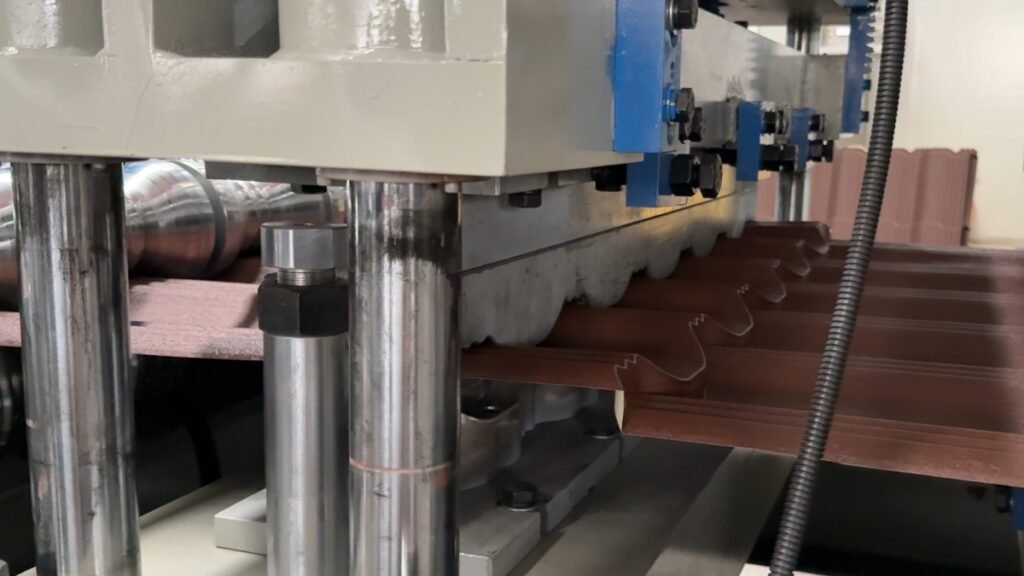
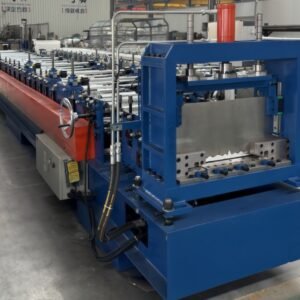
This is not an in-line continuous punching unit. The machine feeds the sheet to the preset length, stops, the hydraulic press forms the stepped embossment, and then the cutting cycle begins. The 35mm step depth gives the tile a pronounced shadow line that improves the visual layering effect on a roof. The 350mm spacing matches standard tile coursing, so the finished panels align properly with traditional glazed tile patterns.
Cutting System – Two-Blade Profile Shear
–Cutting method: blade shear (stop-and-cut)
–Profile cutting at both head and tail ends
–Two sets of blades included (one installed, one spare)
–Cutting action: two-blade structure, profile-matched cutting
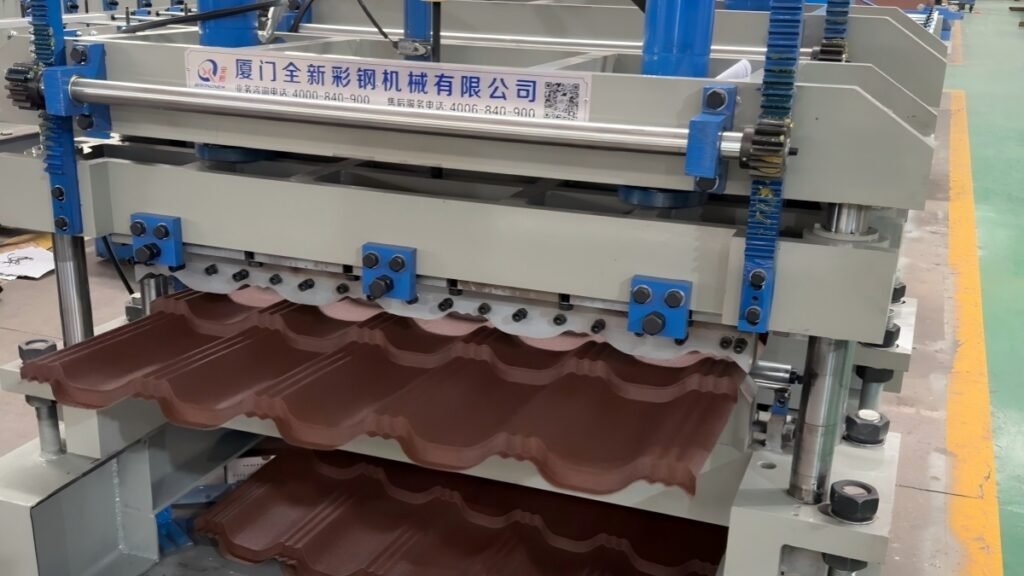
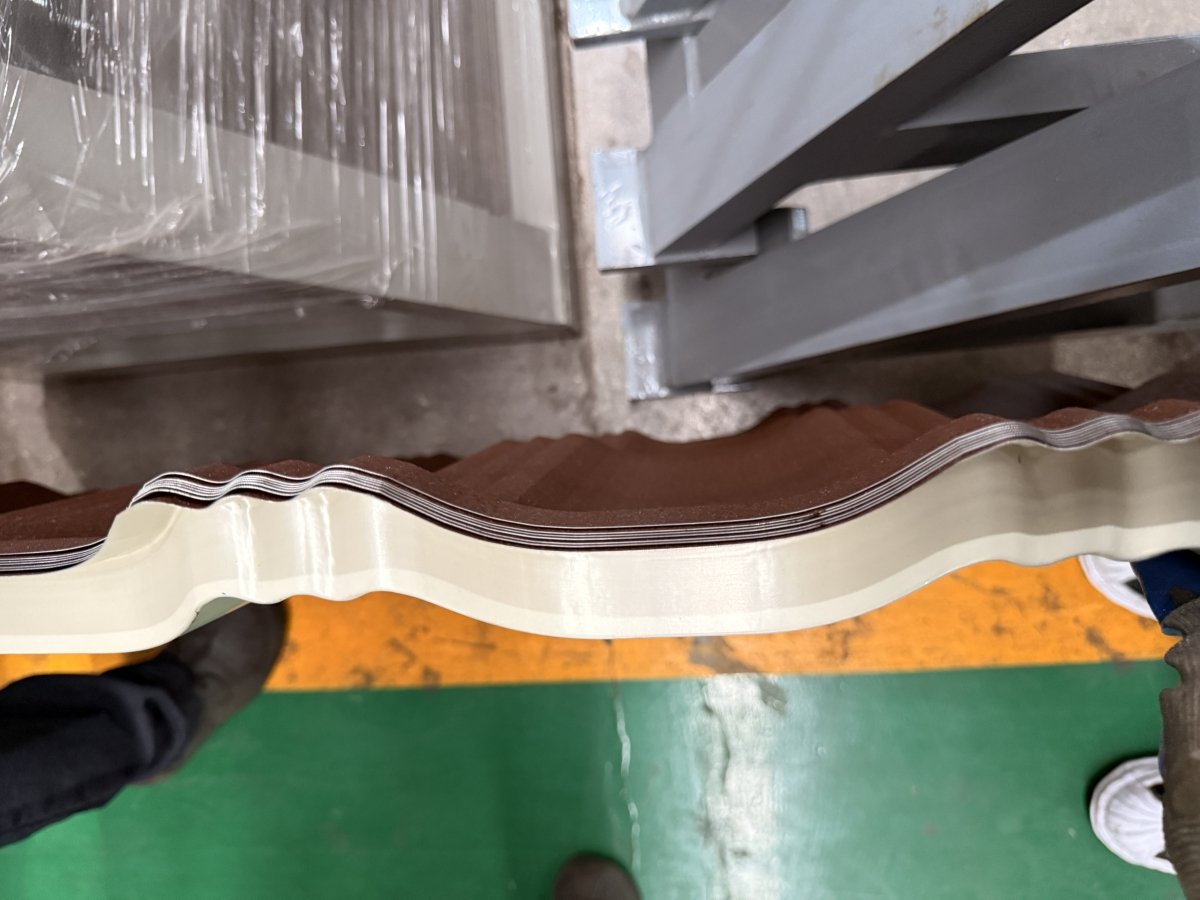
The cutting station uses a pair of profile-matched blades that follow the contour of the formed tile. This profile-shearing design trims both the leading and trailing ends to match the tile profile, so the finished panel has clean, shaped edges that interlock properly with adjacent sheets. The blade geometry is custom-ground to match the YX26 profile — no secondary trimming needed.
You get two blade sets with the machine: one mounted and ready to run, plus a spare set. Given that blade wear depends on thickness and run frequency, having a spare on hand means you can swap and keep production moving without waiting for regrinding.
Manual Shear at Entry
–One manual shear installed at the infeed.
This is a practical addition: a hand-operated shear at the entry point lets you square the coil head or trim off damaged leading edges before feeding into the forming section. It saves you from having to bring the whole coil to a separate cutting station just to prep the strip.
Length Control and Measurement
–Length accuracy: ±1 mm
–Measuring device: photoelectric encoder (Koyo, Japan)
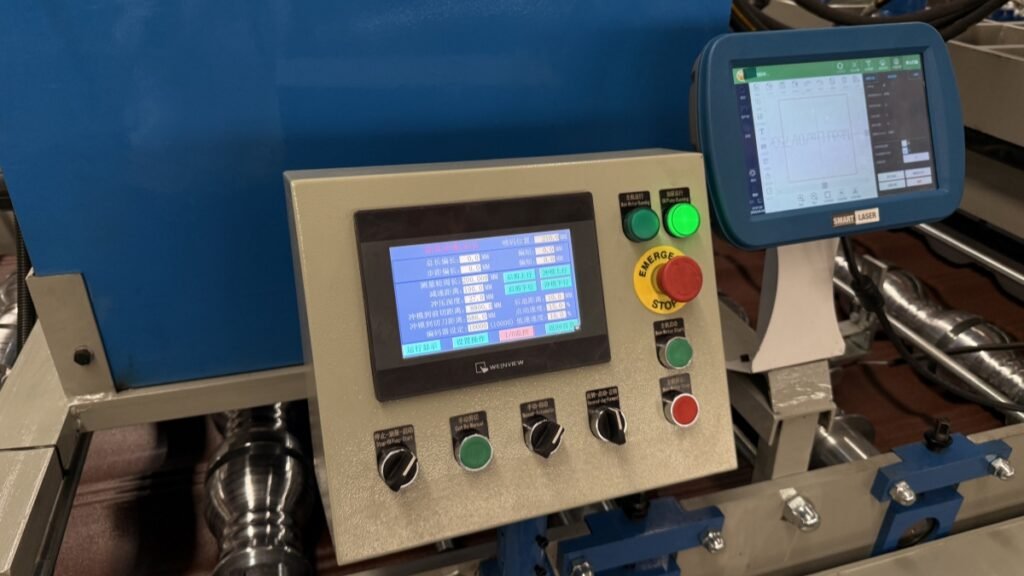
–Control: PLC (Delta make) with 7-inch color touchscreen (Weintek)
The length measurement is handled by a Koyo rotary encoder mounted on the feed path. The encoder sends feedback to the Delta PLC, which tracks the strip travel and triggers the stop-and-cut sequence at the programmed length. The ±1 mm tolerance is realistic for a stop-start hydraulic shear system — not the ±0.5 mm you might see on high-speed flying shears, but fully adequate for roofing panels where overlaps and screw patterns accommodate minor variations.
The interface is a Weintek 7-inch full-color touchscreen, paired with conventional pushbuttons and selector switches. You can set tile length, monitor production count, and adjust parameters through the screen, while the physical controls provide a backup for quick manual jogging or emergency stops.
Coding System
–One inkjet printer included for marking the underside of panels.
The machine comes with a small-character inkjet printer mounted near the exit end. It prints text (typically batch numbers, date codes, or job identifiers) on the underside of each formed tile. Note that the printhead requires regular cleaning — the manual recommends a cleaning schedule based on usage frequency. This is standard for any industrial inkjet system using solvent-based inks; the residue buildup is unavoidable, but the included unit is designed for easy access and quick maintenance.
Key Points for Installation and Operation
- The machine operates on a stop-start cycle: forming → stop → stamping → cutting → resume. This differs from continuous lines; the cycle time per sheet is roughly 2–2.5 m/min linear speed, but actual throughput depends on the cutting interval (i.e., sheet length). Longer panels mean fewer stops per minute, so the effective output is length-dependent.
- The hydraulic system requires proper oil level and cooling if running long shifts — the 15 kW pump generates heat, so ambient temperature and duty cycle affect performance.
- The spare blade set means you can rotate sharpening without downtime.
- The entry manual shear is a convenient feature but works only for small trimming tasks; it is not meant for slitting or major width reduction.
Included in Delivery
–Main roll forming machine with 18 forming stands
–Hydraulic stamping unit with one set of tools (step die)
–Profile-matched shear with two blade sets (one mounted, one spare)
–Manual entry shear
–Inkjet coding printer
–Delta PLC control panel with Weintek 7-inch HMI
–Koyo encoder for length feedback
–Servo drive system with 5.5 kW motor
–Hydraulic power unit (15 kW)
–Operation manual and basic tool kit

Reviews
There are no reviews yet.