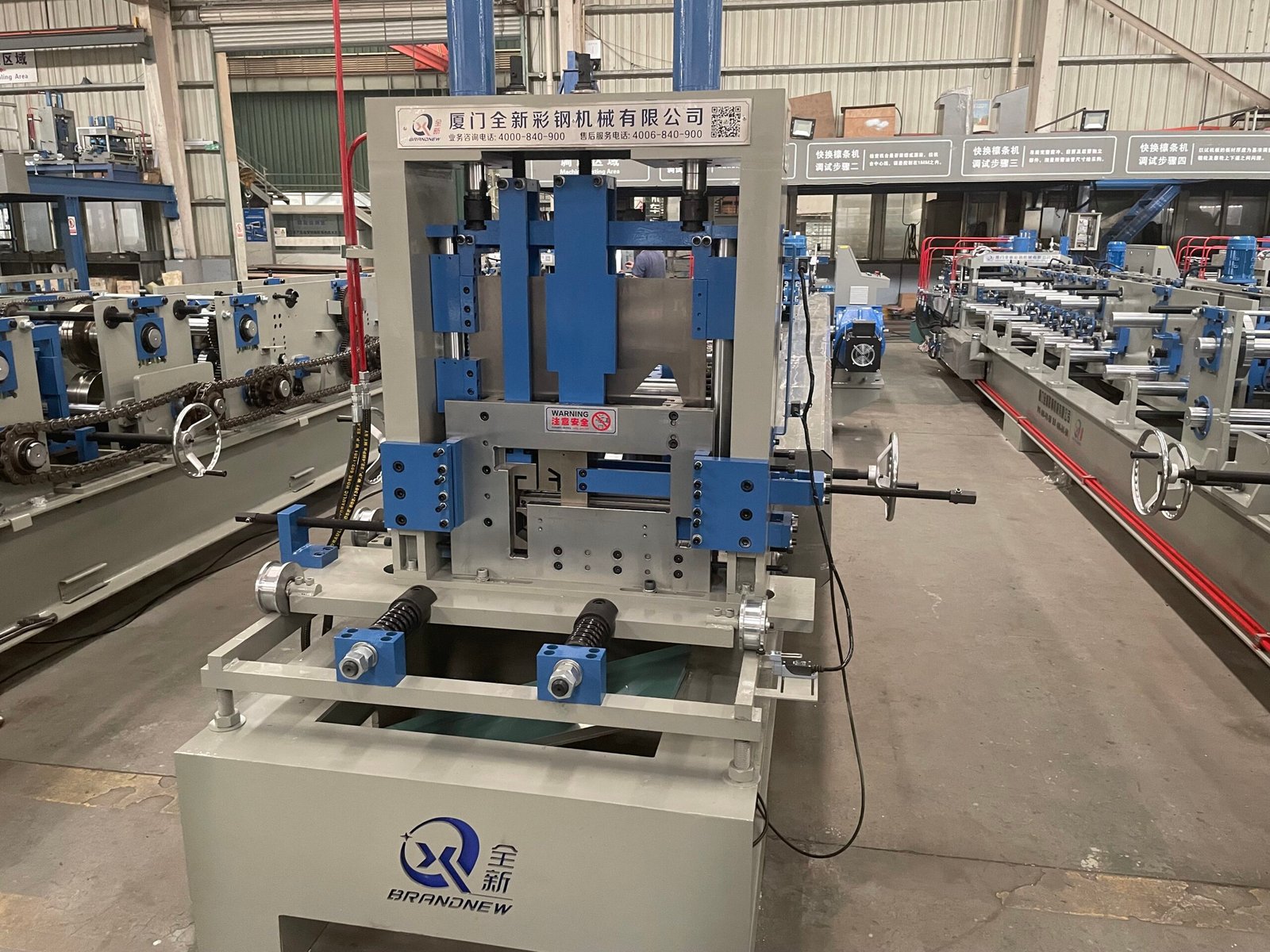
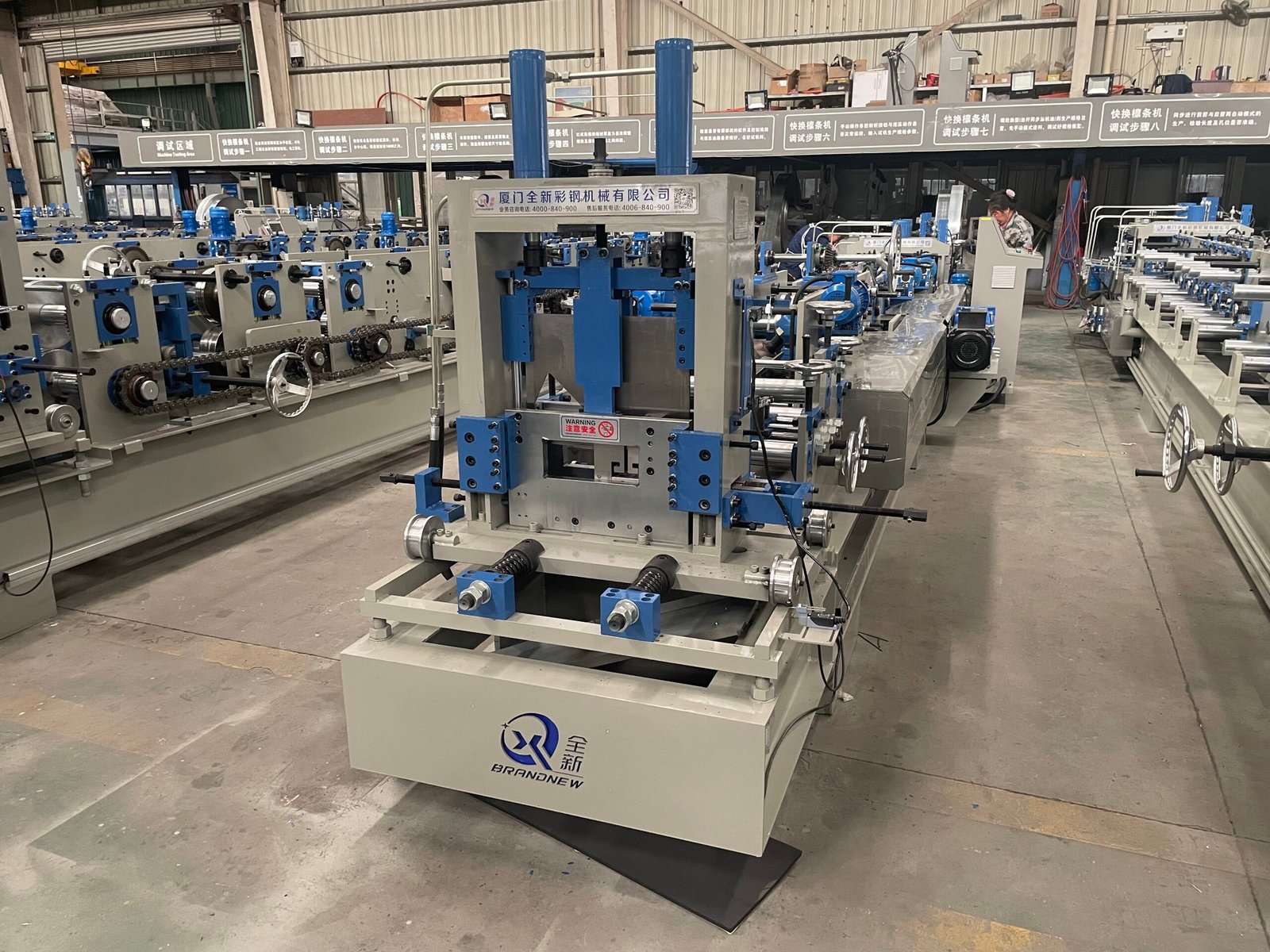
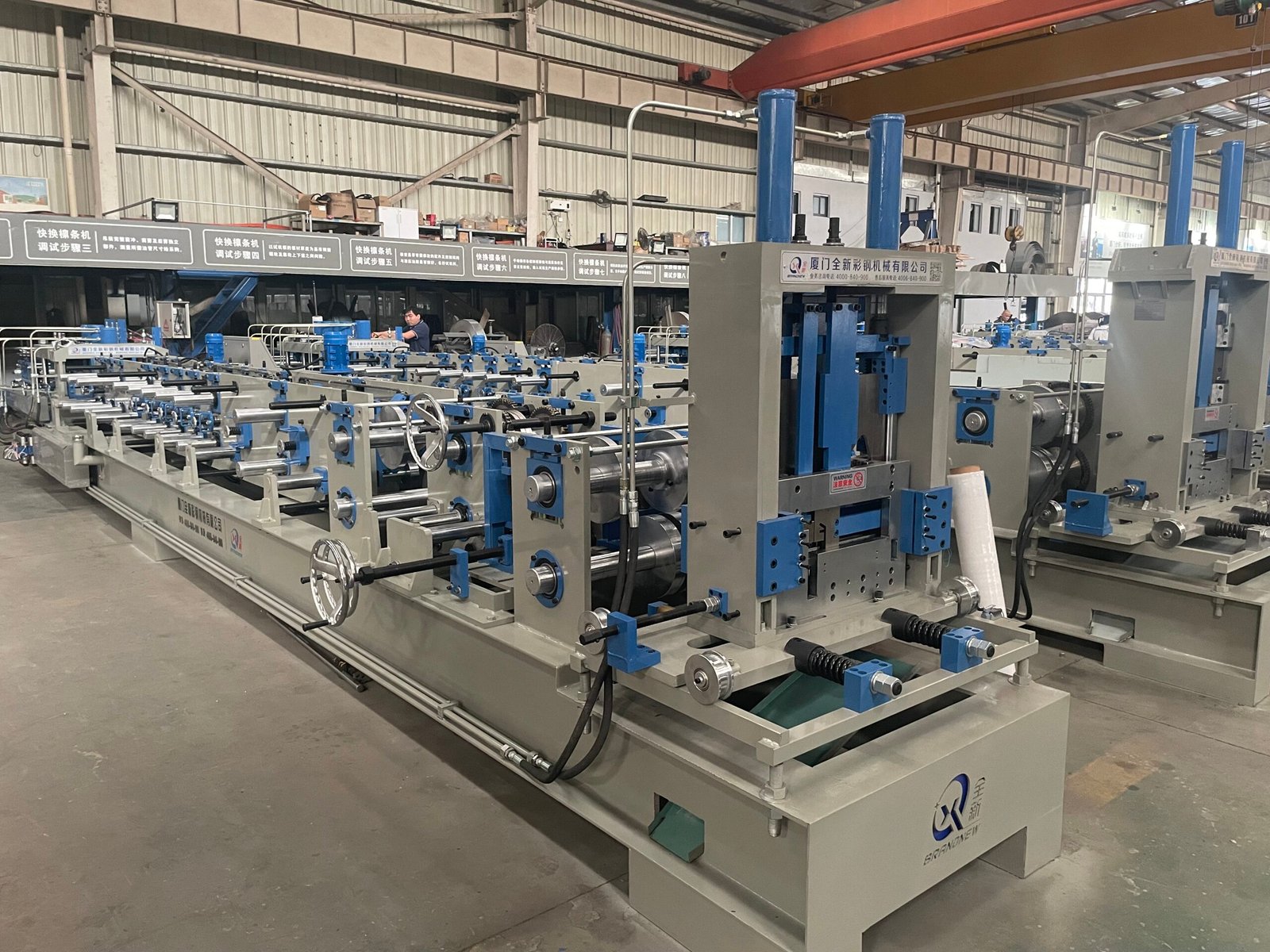
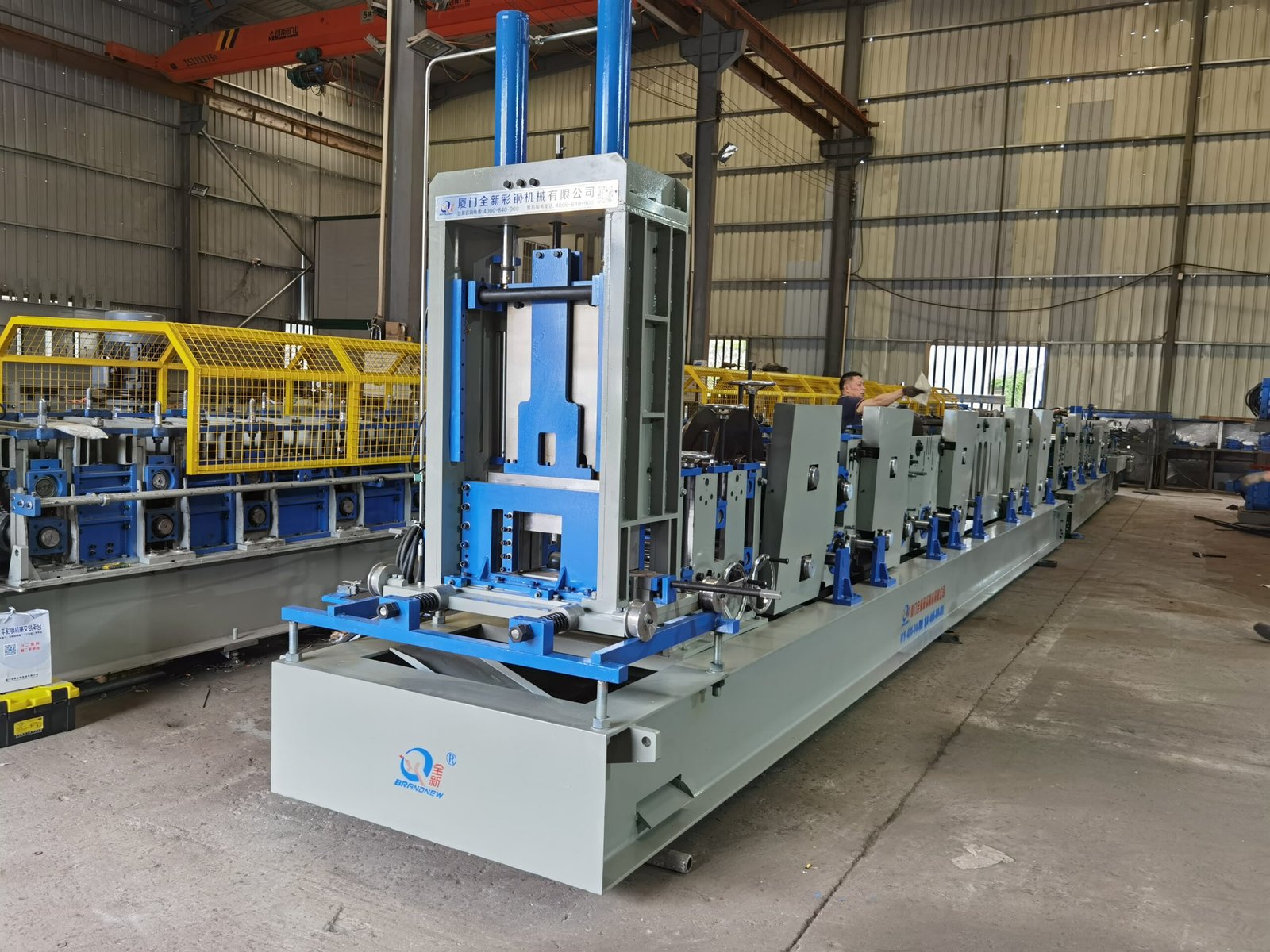
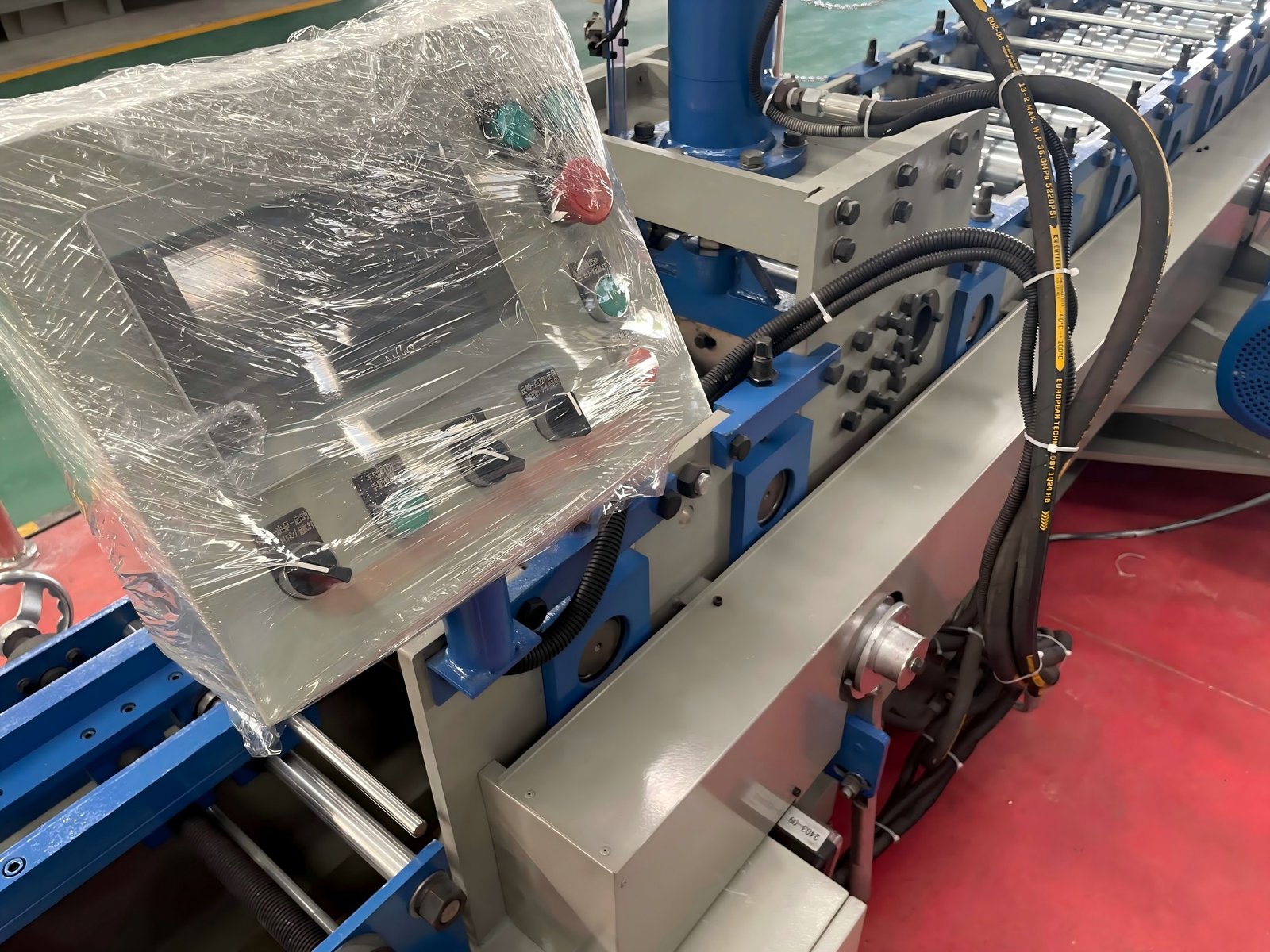
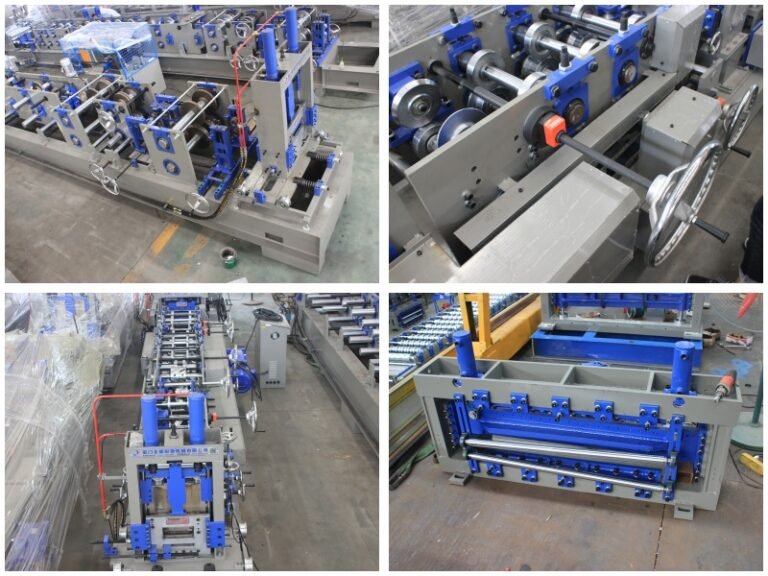
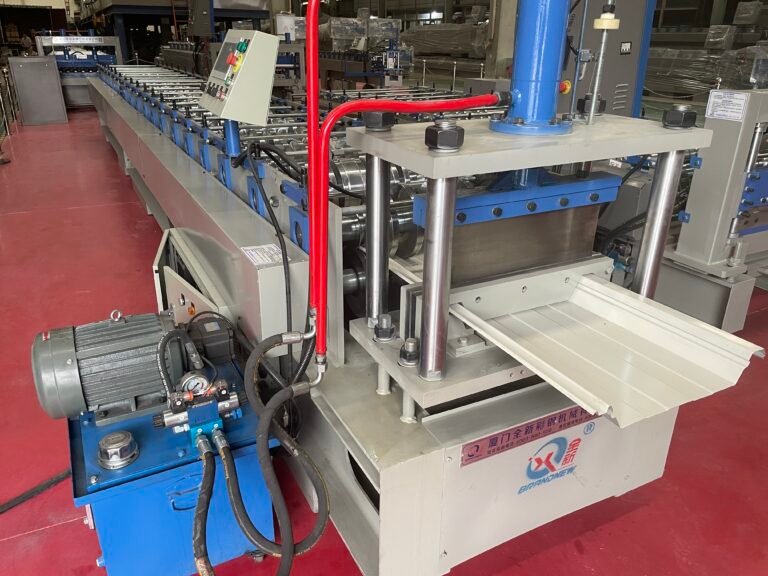
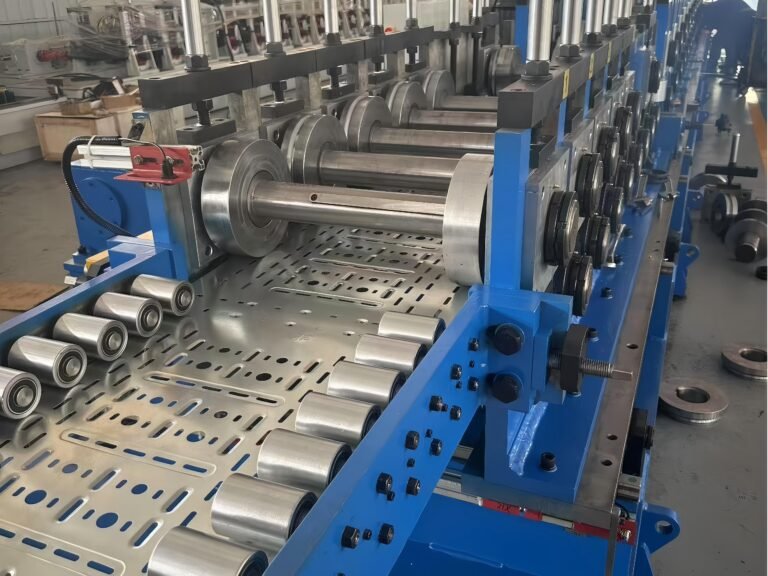
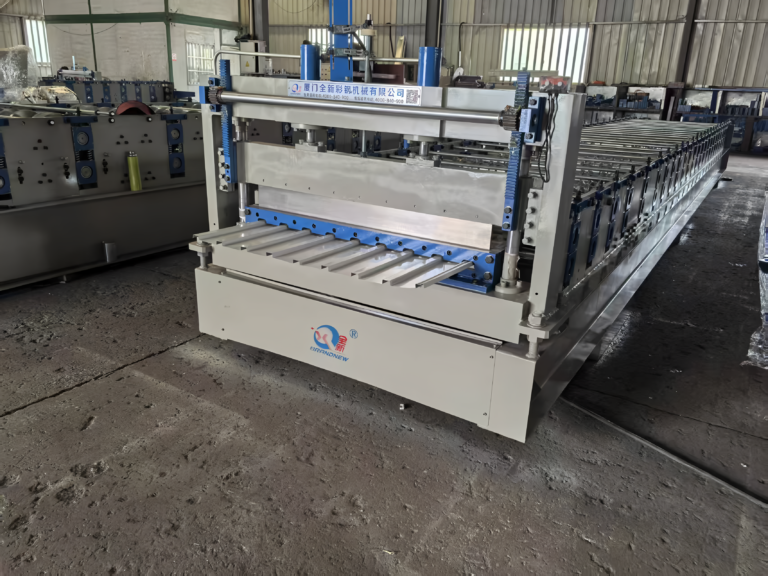
The workpiece passes through the central hole of the rolling head.Three rollers (one active rolling wheel and two support wheels) are uniformly arranged around the rolling head’s circumference.Before operation, a screw mechanism adjusts the rollers radially to center and clamp the workpiece (centering process).All three rollers rotate synchronously in the same direction as the workpiece’s intended spiral/thread direction, matching its helix angle.The active rolling wheel applies controlled radial feed (inward pressure) to deform the workpiece.
During rotation, friction between the workpiece and rollers drives the rollers to rotate.Axial force generated during rolling causes the rolling head and tailstock carriage to move longitudinally along the machine’s bed rails.
The annular shoulder of the rolling wheel contacts the workpiece, inducing localized stress concentration and plastic deformation.This cold-forming action progressively shapes the material into precise threads or grooves without material removal.